
Thomas J. Lynch, MD
Consortium Director
Dr. Thomas J. Lynch Jr. serves as director of the Cancer Consortium and principal investigator of the Cancer Center Support Grant. Dr. Lynch is a world-renowned scientist, highly respected oncologist and successful NCI-designated comprehensive cancer center leader. As the President and Director of Fred Hutchinson Cancer Center, and holder of the Raisbeck Endowed Chair, Dr. Lynch brings more than three decades of experience at highly regarded U.S. cancer centers. He has expertise in solid tumor research, precision medicine and discoveries in fundamental biology. Before joining Fred Hutch, Dr. Lynch held leadership roles as Chief Scientific Officer (CSO) at Bristol-Myers Squibb, Chief Executive Officer (CEO) of Massachusetts General Physicians Organization, director of Yale Cancer Center, physician-in-chief at Yale’s Smilow Cancer Hospital, as well as chief of hematology-oncology at Massachusetts General Hospital and professor of medicine at Harvard Medical School. Dr. Lynch is a member of the American Association for Cancer Research, the American Society of Clinical Oncology, and the International Association for the Study of Lung Cancer.
Sara Hurvitz, MD
Consortium Deputy Director
Dr. Hurvitz serves as the Cancer Consortium's deputy director for Fred Hutchinson Cancer Center. In this role, she serves as the bridge between FHCC and the Cancer Consortium’s partner institutions. Dr. Hurvitz brings a substantive and comprehensive dossier of clinical, research and leadership expertise to this role. She is a breast oncologist who currently serves as Senior Vice President and Director of the Clinical Research Division at Fred Hutchinson Cancer Center and Head of the Division of Hematology-Oncology at the University of Washington School of Medicine. Her leadership has catalyzed multi-institutional collaborations, improved access to clinical trials across the Pacific Northwest, and strengthened the infrastructure for cancer research and care. Over the past two decades, her leadership in therapeutic innovation, precision oncology, and biomarker-guided care, particularly in breast cancer, has driven major advancements in the field and influenced international standards of practice.
Dr. Hurvitz serves on more than 30 international steering committees. Her voice is routinely sought by grant review panels, national policy and guideline-setting bodies, including the Department of Defense Breast Cancer Research Program, ASCO, AACR, and NCCN. She has co-chaired symposia addressing critical issues such as disparities in cancer care and access to biologic therapies. Her work has fundamentally altered the way breast oncology clinicians approach therapeutic sequencing, treatment personalization, and inclusion of underserved populations. As a prolific investigator and thought leader, she has authored over 200 peer-reviewed publications, many of which are landmark studies that continue to shape clinical oncology.
Mignon Loh, MD
Consortium Deputy Director
Dr. Mignon Loh serves as the Cancer Consortium's deputy director for Seattle Children's. Dr. Loh is center director for the Ben Towne Center for Childhood Cancer Research and chief of the Division of Pediatric Hematology, Oncology, Bone Marrow Transplant and Cellular Therapy, overseeing the Cancer and Blood Disorders Center at Seattle Children’s Hospital. Her research focuses on how and why leukemia progresses, as well as making genomics discoveries in the lab that translate into new and better diagnostics and therapeutics for children, adolescents and young adults with leukemia.
Elizabeth (Liz) Swisher, MD
Consortium Deputy Director
Dr. Elizabeth Swisher serves as the Cancer Consortium deputy director for the University of Washington. Dr. Swisher is a gynecologic oncologist, UW School of Medicine professor and Co-Leader of the Breast and Ovarian Cancer Research Program at the Fred Hutch/University of Washington/Seattle Children's Cancer Consortium. She has a research and clinical focus on the genetics and prevention of gynecologic cancers including novel therapeutics.
Dr. Swisher earned a BS from Yale University and received her MD from the University of California at San Diego. She completed her residency at the University of Washington in Ob/Gyn and a fellowship in gynecologic oncology at Washington University St Louis. She is board certified in gynecologic oncology and obstetrics and gynecology.
Dr. Swisher's clinical interests include gynecologic cancer, clinical trials, cancer prevention, cancer genetics, and novel therapeutics.
Dr. Swisher utilizes tumor information to make personalized treatment plans for each cancer patient. She is working to make genetic testing for cancer risk accessible to all women with and without cancer so that no woman dies of a preventable hereditary cancer.
Associate Directors
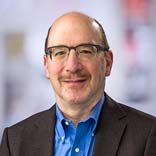
Bruce Clurman, MD, PhD
Dr. Bruce Clurman is the executive vice president, chief scientific officer and deputy director of Fred Hutch. He studies the cell cycle, the molecular pathways that drive cells to multiply. This work includes understanding how protein destruction by the ubiquitin–proteasome system controls the cell cycle in normal and cancer cells. His ultimate goal is to understand how these fundamental regulatory pathways shape cancer development and progression, and use this understanding to design new cancer therapies that target these pathways. For example, his group is developing a treatment strategy to capitalize on mutations in key growth-accelerating genes called CDKs. This strategy would push cancer cells toward an unsustainable level of DNA damage without killing healthy cells. Dr. Clurman’s team also is studying how mutations in the gene for Fbw7, a component of the system that regulates destruction of a network of tumor-driving proteins, can cause cancer. The team is designing a drug to restore the function of the mutant Fbw7 in cancers and thus rein in tumor growth.
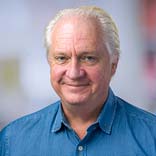
Eric Holland, MD, PhD
Dr. Eric Holland earned a doctorate in biochemistry and molecular biology from the University of Chicago and a medical degree from Stanford University. He completed a neurosurgery residency at the University of California at Los Angeles School of Medicine and a fellowship at the National Cancer Institute in Bethesda, MD. His postdoctoral training included work with two Nobel laureates: Dr. Paul Berg, who pioneered recombinant DNA technology at Stanford, and Dr. Harold Varmus, director of the National Cancer Institute.
Dr. Holland was recruited to Fred Hutchinson Cancer Research Center in Seattle from Memorial Sloan-Kettering Cancer Center in New York, where he directed the Brain Tumor Center and built one of the nation’s most successful research and clinical programs. As a neurosurgeon and physician–scientist, he addresses the molecular basis of brain tumors to develop new, more precise approaches to their treatment. He specializes in glioblastoma, the most common brain cancer in adults, has developed mouse versions of brain cancer that mimic how tumors behave in humans, and has identified tumor cells that are resistant to standard therapies. These research findings have led to clinical trials for new drugs and drug combinations. At Fred Hutch, Dr. Holland and his colleagues will help usher in an era of precision treatment for cancer patients.
Dr. Holland has received the American Brain Tumor Association Research Award, among other honors. He is a member of the Institute of Medicine of the National Academies, the Washington Academy of Sciences, and a member of the editorial boards of Virology, Molecular Cancer Research, the Journal of Molecular Medicine and Neoplasia.
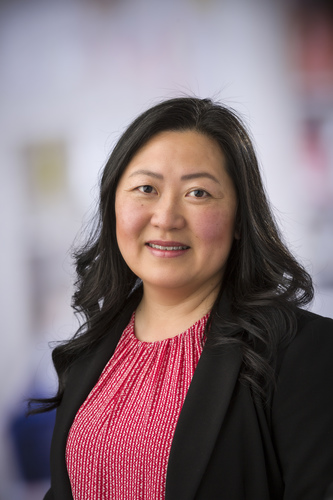
Wendy Law, PhD
Dr. Wendy Law trained at the Fred Hutch Cancer Center as a graduate student and postdoc before taking on a science policy position with then-Fred Hutch President and Nobel Laureate Dr. Lee Hartwell to help the National Cancer Institute (NCI) develop their Proteomic Initiative. She then joined the Rivkin Center for Ovarian Cancer Research as their Director of Scientific Programs and Operations. Dr. Law returned to Fred Hutch in 2016 to serve in her current role as the Associate Director of Administration for the Fred Hutch/University of Washington/Seattle Children’s Cancer Consortium with over 670 faculty members who hold over $240 million in cancer-focused research grants across Fred Hutch, University of Washington, and Seattle Children’s. The Consortium is nearing its 50th year of comprehensive cancer center designation from NCI.
As a graduate student and postdoc, Dr. Law was involved in Fred Hutch’s grassroots diversity, equity, and inclusion efforts including the Coalition for Minority Scientist Recruitment and Retention as the chair, the Student-Postdoc Advisory Committee, and the Community of Employees for Racial Equity (formerly the Diversity Council). She is currently on advisory committees for the Office of Community Outreach & Engagement and for the Office of Diversity, Equity & Inclusion.
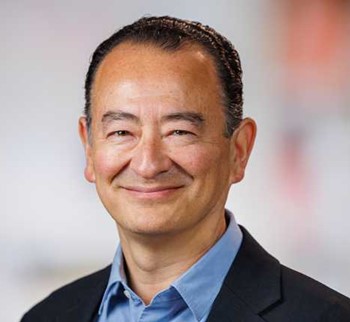
Christoper Li, MD, PhD
Dr. Christopher Li is an epidemiologist and his research spans breast and colorectal cancer early detection, screening, etiology and survivorship. His work has identified novel risk factors related to the development of cancer and has evaluated the molecular features of cancer that are associated with poor outcomes. He also investigates the causes of disparities in cancer incidence, treatment, and mortality. Additionally, he co-leads Fred Hutch’s award-winning cancer registry, the Cancer Surveillance System, which tracks cancer incidence and survival in 13 Washington counties. Researchers everywhere use the Fred Hutch registry data to identify and track cancer trends, causes, and adverse outcomes. Dr. Li also co-leads the Coordinating Center for NCI’s Population-based Research to Optimize the Screening Process (PROSPR) consortium focused on improving screening for cervical, colorectal, and lung cancers, and a Clinical Validation Center in NCI’s Early Detection Research Network. This latter project seeks to identify blood-based biomarkers that signal early stages of breast cancer in order to increase the chances of detecting the disease earlier when it is more treatable.
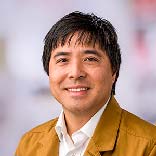
Jason Mendoza, MD, MPH
Dr. Jason “Jay” Mendoza is the associate program head of the cancer prevention program in the Public Health Sciences Division at Fred Hutchinson Cancer Center. He is also the associate director of Community Outreach and Engagement (COE) for the Fred Hutch/University of Washington/Seattle Children's Cancer Consortium. The Office of COE uses community-based participatory research approaches to address health inequities and reduce risk of cancer, in partnership with community-based organizations and key community leaders.
Dr. Mendoza’s own research focuses on inequities in physical activity and nutrition outcomes among youth and young adults, with a particular focus on racial/ethnic minorities, those from low socioeconomic backgrounds and cancer survivors. He develops and tests behavioral interventions in schools, communities and clinics to eliminate these inequities. Examples include programs to promote walking and biking to school, promote and track physical activity, reduce food insecurity, and manage screen time. Dr. Mendoza is also a professor of pediatrics at the University of Washington School of Medicine and a pediatric attending physician at Harborview Medical Center.
Dr. Mendoza earned his undergraduate degree from the University of Chicago and subsequently attended Rush Medical College where he earned his MD. He received his pediatric residency training at the UW/Seattle Children's Hospital and pursued advanced health services/community-engaged research training through the UW Robert Wood Johnson Clinical Scholars Program, where he also earned a MPH through the UW School of Public Health. He spent his early faculty career at Baylor College of Medicine in the Children's Nutrition Research Center and Academic General Pediatrics. He subsequently returned to the UW/Seattle Children's in 2013.
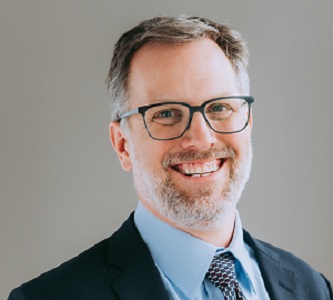
Gordon Roble, DVM, MBA
As associate vice president for Shared Resources, Dr. Gordon Roble oversees the scientific operations of twelve specialized core facilities at Fred Hutch. He has served in this role since 2022, following previous leadership positions as senior director of Translational Shared Resources and director of the Comparative Medicine Shared Resource. Dr. Roble also continues to serve as Fred Hutch's Attending Veterinarian.
Nationally, he is actively involved in collaborative Cancer Center Shared Resource initiatives, including as a founding member of the Shared Resources Management Affinity Group and the National Alliance for Cancer Center Shared Resources. Dr. Roble earned his Doctor of Veterinary Medicine from Tufts University and completed postdoctoral training in laboratory animal medicine through the Tri-Institutional Training Program (MSKCC/Weill Cornell/Rockefeller University) in NYC. He also holds an MBA from the NYU Stern School of Business.
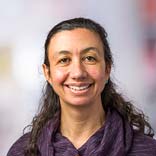
Nina Salama, PhD
Dr. Salama received a BS with high distinction in Honors Biology from the University of Illinois Urbana-Champaign in 1989. She then moved to the University of California Berkeley for her PhD in Molecular and Cell Biology. Her dissertation, conducted with Dr. Randy Schekman and supported by an NSF fellowship, focused on defining the vesicle coat (COPII) that drives movement of secretory protein cargo between the endoplasmic reticulum and the Golgi apparatus. Dr. Salama then became interested in the ability of pathogenic bacteria to manipulate host cells and tissues to create protected niches within the human body. This interest led her to Dr. Stanley Falkow’s laboratory in the Department of Microbiology and Immunology in 1995 for a postdoctoral fellowship supported by the Jane Coffin Child Memorial Fund for Medical Research. While Falkow’s group studied many pathogens, Dr. Salama spearheaded the development of genetic and genomic tools as well as an animal model of infection for the study of Helicobacter pylori, the first bacteria to be designated as a carcinogen by the World Health Organization.
In 2001 Dr. Salama was recruited to Fred Hutchinson Cancer Research Center as an Assistant Professor in Human Biology. Now a full professor, her work focuses on the role of genetic variation and cell morphology in chronic stomach colonization by. H. pylori as well as how this organism modifies the stomach tissue environment to simultaneously promote long term bacterial persistence and preneoplastic progression. Dr. Salama prioritizes training and mentoring of the next scientific generation. She was co-Director of the Molecular and Cellular Biology Graduate Program jointly administered University of Washington and Fred Hutch from 2016-2022 where she spearheaded a number of initiatives to promote recruitment and retention of historically underrepresented groups in STEM with a particular focus on more equitable access and improved mentoring.
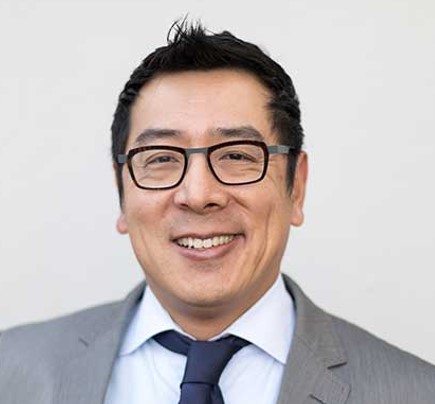
Evan Yu, MD
Dr. Yu cares for patients with prostate, bladder and testicular cancers. He has research interests in novel PET imaging technologies in prostate cancer. Additionally, he is interested in manipulating the prostate cancer microenvironment to convert an immune exclusive microenvironment to an inflamed phenotype that will promote the utility of immunotherapy. He also does work in developing antibody drug conjugates for patients with bladder cancer.
He has research projects that span the spectrum of drug discovery and early phase testing all the way to leading large, international randomized Phase 3 clinical trials with promise to lead to new U.S. Food and Drug Administration (FDA) approvals. For example, he is working with new immune checkpoint inhibitors that target VISTA, agents that alter the immunosuppressive microenvironment by decreasing adenosine accumulation, novel adrenal androgen annihilators and androgen receptor degraders, and HER2 targeting in bladder cancer using antibody drug conjugates.
Dr. Yu is section head of Medical Oncology in the Clinical Research Division at Fred Hutch. He is a principal investigator, or PI, for the National Cancer Trials Network Lead Academic Performance Site (LAPS) Grant, SWOG Cancer Research Network and Eastern Cooperative Oncology Group/American College of Radiology Imaging Network. Dr. Yu is also the core director for the Pacific Northwest Prostate Cancer SPORE and co-PI of the DoD Prostate Cancer Clinical Trials Consortium for Fred Hutch. Previously, he served as director of the Hematology/Oncology Fellowship Program for a decade at Fred Hutch.
Dr. Yu has served for many years on the National Cancer Institute Genitourinary Cancers Steering Committee and is currently the co-chair for the National Cancer Institute Prostate Cancer Task Force. He has held various leadership or committee roles within the American Society of Clinical Oncology, the American Association for Cancer Research and serves as a senior editor for Clinical Cancer Research and Uro-Today.